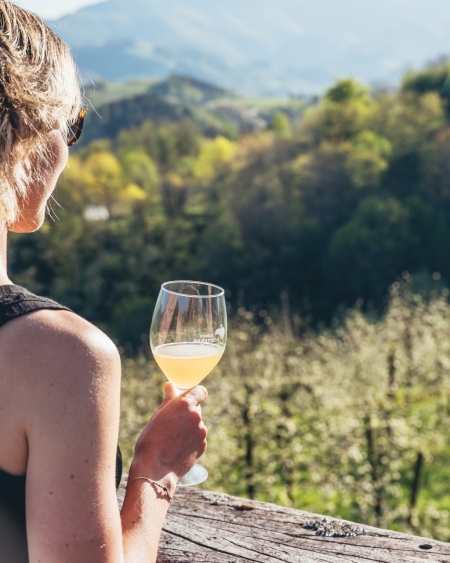

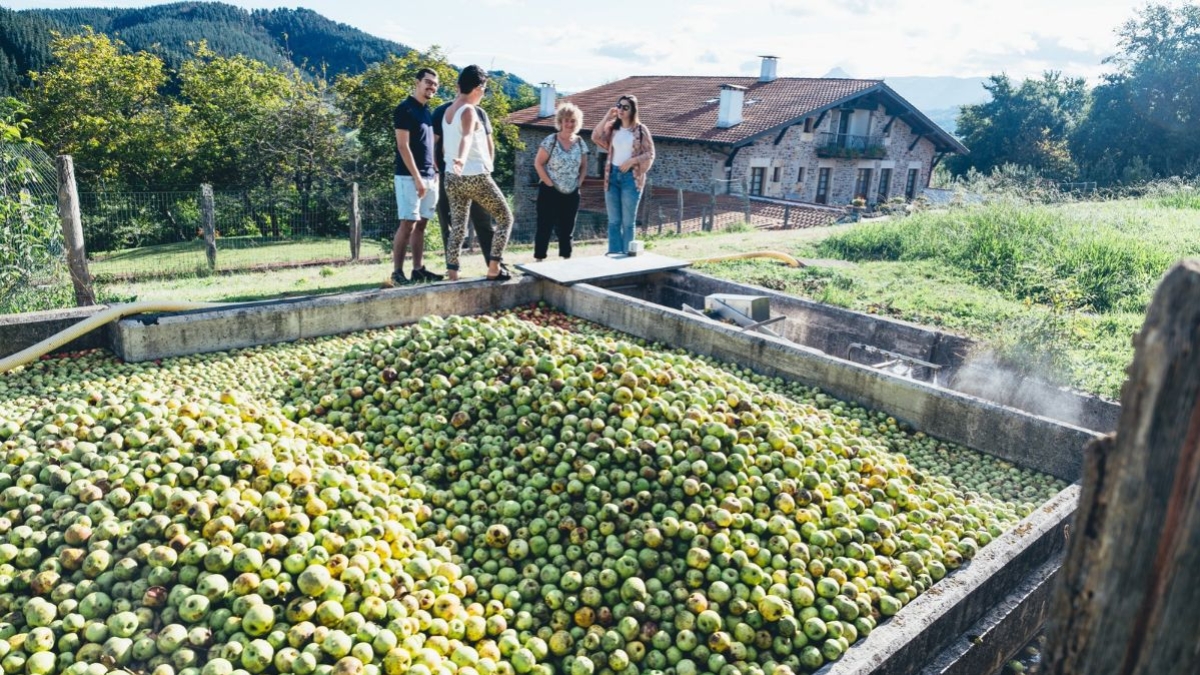
Autumn is undoubtedly the season that best defines the essence of Basque cider culture. Between September and November, cider houses experience their most intense and authentic period: the apple harvest and the production of the new cider. It is a time when the product's natural cycle becomes visible and tangible, and when each cider house transforms into a stage where tradition, hard work, and nature come together.
Visiting a cider house at this time of year is far more than a gastronomic excursion. It is an immersion into a world where time is measured by natural cycles, where every action holds ancestral meaning, and where hospitality is an integral part of the craft. Producers welcome visitors with the same generosity with which they offer their cider: unhurried, unpretentious, and driven by the conviction that good things deserve to be shared.
It all begins with a meeting: the producer welcomes the group at the farmhouse and explains—with natural ease—everything that lies behind a bottle of cider. There is much more here than just an artisanal process; there is a landscape of apple trees tended for decades, a history passed down through generations, and a culture deeply rooted in the land, its language, and its customs. It is a way of life—a way of understanding time and labor—and, of course, there is a family that has chosen to keep this tradition alive.
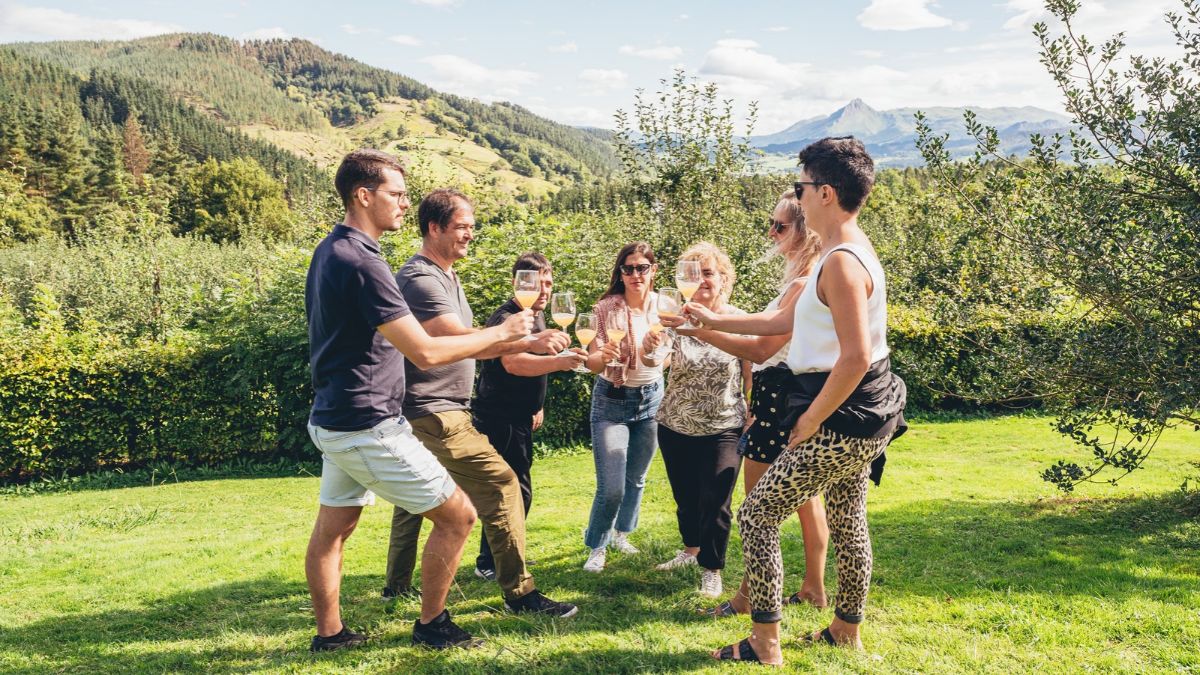
From there, the group walks to the orchard. Amidst trees heavy with fruit, visitors taste different apple varieties—sweet, bitter, and tart—learning to distinguish their nuances, textures, and peak ripeness. Visitors pick up the *kizkia*—the traditional Basque tool—and harvest the apples by hand, one by one, mirroring the movements repeated thousands of times by those who work this land.
The next stop is the production area, where the presses are in full operation. You can see the apples being crushed first, then pressed, and watch as a golden liquid emerges from the process—ready to be tasted on the spot: freshly squeezed juice, naturally sweet and alcohol-free, capturing the full intensity of fruit that has just fallen from the tree.
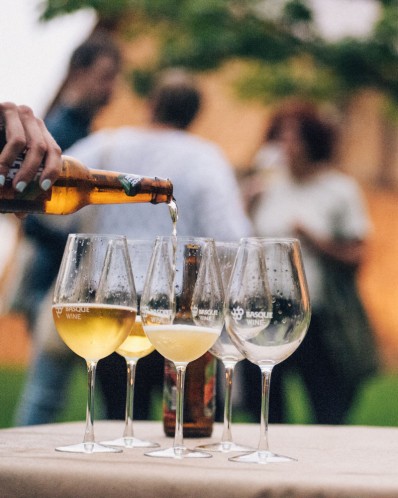
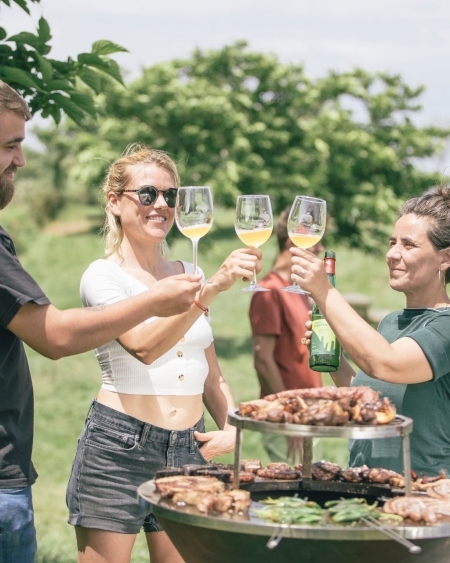
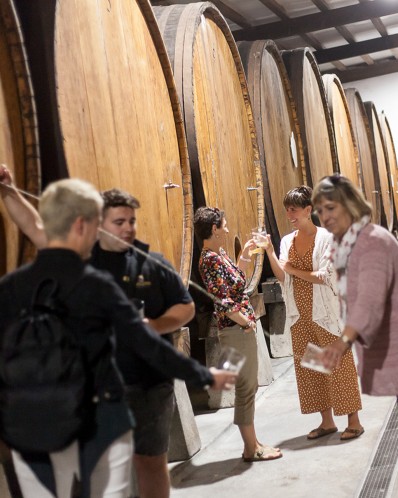
The tour concludes in the cider house cellars, amidst the oak or chestnut *kupelas* (large wooden barrels). There, you can taste natural cider—both straight from the barrel and bottled—always accompanied by a house *pintxo*. Once the group has experienced the entire journey, from apple tree to barrel, it is time to sit down at the table. That is when you truly experience the essence of a cider house: the traditional menu, the shared conversation, the ongoing *txotx* ritual, and the certainty of having grasped something fundamental about this culture.
GUIDED TOUR AND LUNCH AT A CIDER WINERY
Guided tours last approximately one hour and are offered every day of the week—from Monday to Sunday—at 14 cider houses located throughout the region. They typically begin at 12:30 PM, just before lunch, allowing the group to round out the experience with a traditional cider house meal on-site.
At Sagardoa Route, we organize tours in four languages: Basque, Spanish, English, and French. We handle reservations at various cider houses based on availability, always seeking the option that best suits each group's needs.
We also offer additional services to enhance the experience, including group tours, complementary activities, transportation, and other customizable options.
CIDER-MAKING WORKSHOP
Apple season, which runs from September to November, is undoubtedly the best time of year to visit a cider winery. During these months, the apple trees laden with fruit and the intense aroma of cider wafting through the cellars transform each visit into a complete, sensory experience deeply connected to the land.
The workshop is a highly hands-on and participatory experience, in which visitors take part in the entire apple juice-making process, from start to finish. It begins with picking the apples directly from the orchard, where the fruit can be selected at its peak ripeness. Next, the apples are crushed using the traditional method, placed in the press, and finally, the freshly squeezed juice is tasted in its purest form, bursting with all the flavor, aroma, and freshness of the freshly picked fruit. This educational and sensory activity allows you to understand firsthand how apples are transformed into juice, step by step.